
A clean home is not only more comfortable to live in. It is also easier to maintain, healthier for the people inside it, and less likely to develop expensive problems over time. Many common household repairs start with small issues that were easy to overlook: leaves blocking water flow, dust collecting in vents, grime building up in grout, debris sitting in drains, or moisture lingering in rooms that need better ventilation.
The key is to focus on areas that affect safety, water flow, indoor air quality, flooring, surfaces, and major home systems. When these areas are maintained consistently, your home is better protected from damage, odors, clogs, wear, and emergency repairs.
Create a Seasonal Cleaning Plan

A good cleaning routine starts with a plan. Without one, most families clean only when something becomes visibly dirty or when a problem appears. While daily tidying matters, deeper cleaning projects should be scheduled throughout the year so important areas do not get ignored.
A simple home cleaning plan might include:
- Weekly tasks, such as vacuuming, wiping counters, cleaning bathrooms, and taking out trash
- Monthly tasks, such as cleaning appliance filters, checking under sinks, and washing entry mats
- Seasonal tasks, such as deep cleaning flooring, clearing exterior drainage areas, and inspecting moisture-prone spaces
- Annual tasks, such as professional service appointments, system inspections, and major deep cleaning projects
Keep the list realistic. A schedule that is too complicated will be hard to follow. The best routine is one your family can actually maintain.
Refresh Soft Surfaces That Hold Dust and Allergens
Soft surfaces can make a home feel warm and comfortable, but they also collect dirt, dust, pollen, pet dander, crumbs, and odors. Rugs and carpets often look clean on the surface while holding debris deep in the fibers. For families with children, pets, or allergy concerns, regular care is especially important.
Vacuuming is the first step. High-traffic areas should be vacuumed often, especially near entrances, hallways, living rooms, bedrooms, and play areas. Use slow passes instead of rushing; a carpet cleaner may be needed for this area as well. If your vacuum has attachments, use them along baseboards, under furniture, stairs, and corners.
Spills should be handled quickly. Blot the area rather than rub it, since rubbing can push the stain deeper or spread it. Use cleaning products that are safe for the material, and always test a small hidden area first when using something new.
A rug cleaning service can be useful for delicate area rugs, wool rugs, antique rugs, heavily stained rugs, or pieces that need special handling. Some rugs should not be cleaned the same way as standard carpet, especially if they have natural fibers, dyes, fringe, or handmade construction.
Keep Water Moving Away From the House
Water control is one of the most important parts of home protection. When water does not properly drain away from the house, it can damage the roofline, siding, foundation, landscaping, basement, crawl space, and walkways. One of the simplest ways to prevent these problems is to keep exterior drainage areas clean.
Gutters collect leaves, twigs, roof grit, seed pods, dirt, and other debris. When they are clogged, rainwater may overflow rather than flow through the downspouts. This can cause water to spill over the edges, run down siding, pool around the foundation, or back up under roof materials.
A gutter cleaning company can remove buildup safely and check whether water is flowing properly. This is especially helpful for multi-story homes, steep roofs, or properties with many trees nearby. Ladder work can be dangerous, so homeowners should be careful about attempting this job without the right equipment and experience.
Sometimes, cleaning is not enough. If sections are sagging, leaking, pulling away from the home, or draining poorly, a gutter company may be needed for repairs, replacement, or gutter guard installation. The goal is to create a reliable path for water to move away from the structure.
Stop Small Clogs Before They Become Backups

Drains work quietly in the background until something goes wrong. A slow sink or shower may not seem urgent, but it can be an early sign of buildup in the plumbing system. Hair, soap, grease, food particles, toothpaste, and other debris can collect inside pipes over time.
Professional drain cleaning may be needed when clogs keep returning, water drains slowly in multiple fixtures, or odors come from the pipes. A recurring clog usually indicates a problem farther down the line than a simple surface blockage.
Main drain cleaning may be necessary if several drains are slow at the same time, toilets gurgle, water backs up into tubs or floor drains, or sewage odors appear. These signs may indicate a larger blockage in the main line. Waiting too long can lead to messy and expensive backups.
To reduce drain problems:
- Use sink and shower strainers.
- Avoid flushing wipes, paper towels, or hygiene products.
- Scrape food into the trash before rinsing dishes.
- Dispose of grease in a container, not the sink.
- Clean drain stoppers regularly.
- Pay attention to gurgling sounds or odors.
- Address slow drains before they stop completely.
Small drain issues are easier to handle than full backups. Acting early can protect floors, cabinets, walls, and belongings from water damage.
Pay Attention to the Water Your Family Uses
Clean water is essential for drinking, cooking, bathing, cleaning, and everyday comfort. While many homeowners focus on visible cleaning tasks, the systems that affect water quality also need routine care.
Start with filters. Refrigerator, under-sink, whole-house, and pitcher filters should be replaced according to the manufacturer’s schedule. A filter used for too long may become less effective, affecting taste, odor, and flow.
Faucet aerators should also be cleaned. These small screens can collect mineral buildup and debris over time. If water pressure seems low at one fixture, the aerator may need to be removed and rinsed. Refrigerator water dispensers, ice makers, reusable bottles, and water pitchers should also be cleaned regularly to prevent buildup.
Drinking water systems should be serviced based on the type of system installed. Some require filter changes, sanitation, pressure checks, or testing. If your water has an odd taste, odor, cloudiness, staining, or reduced flow, it may be time to investigate further.
Homes with wells should pay close attention to testing. Annual water testing can help identify problems that may not be visible. Even municipal water users should watch for changes, especially after plumbing work, local water issues, or long periods away from home.
Clean Fireplace Areas Before Heavy Use
Fireplaces, wood stoves, and chimney systems create warmth and atmosphere, but they also need careful maintenance. Soot, ash, creosote, nesting materials, leaves, and debris can create fire hazards or airflow problems. Cleaning these areas before regular seasonal use is an important safety step.
A chimney cleaner can remove buildup from areas homeowners cannot safely reach. Creosote, in particular, can be dangerous because it is highly flammable. The more often a fireplace or wood stove is used, the more important regular cleaning becomes.
Homeowners can still handle basic fireplace care between professional cleanings. Once the ashes are fully cool, use a fireplace shovel to remove them and place them in a metal container. Do not put warm ashes in plastic bins, cardboard boxes, or regular trash bags. Even ashes that look cool can hide hot embers.
Watch for signs that the chimney or fireplace needs attention:
- Smoke entering the room
- Strong odors from the fireplace
- Poor draft or weak airflow
- Excess soot buildup
- Animal or bird sounds in the chimney
- Damaged dampers
- Cracked firebox materials
- Staining around the fireplace
Keep furniture, curtains, toys, blankets, and decorations away from the fireplace. If you use a wood-burning fireplace, burn only seasoned wood and avoid trash, cardboard, or painted materials.
Chimney caps, dampers, screens, and fireplace doors should also be checked. A clean, properly maintained fireplace area helps reduce fire risk and keeps smoke where it should.
Protect Wastewater Systems With Better Habits

A local septic cleaning company can pump and inspect the tank on a recommended schedule. The frequency of service depends on tank size, household size, water usage, and system condition. Keeping records of pumping and inspections makes it easier to stay on track.
Inside the home, avoid flushing anything that does not belong in the system. Wipes, paper towels, feminine hygiene products, diapers, grease, chemicals, and certain cleaning products can cause problems. Even products labeled as flushable may not break down as easily as toilet paper.
The outdoor area matters too. Keep vehicles, heavy equipment, sheds, and deep-rooted trees away from the drain field. Compacted soil or damaged pipes can interfere with proper function.
A septic system is not something homeowners should ignore until there is a problem. Clean habits and scheduled maintenance can help protect the system for years.
Deep Clean Hard Floors and Grout
Hard floors are often easier to maintain than carpet, but they still need more than a quick sweep or mop. Dirt, grit, spills, grease, and moisture can build up in grout lines, seams, textured surfaces, and corners. Over time, this can make floors look dull and harder to clean.
Kitchens, bathrooms, mudrooms, laundry rooms, and entryways usually need the most attention. These areas collect moisture, food residue, soap film, outdoor dirt, and everyday grime. If spills are not cleaned quickly, they can stain surfaces or make floors slippery.
Grout is a common problem area. Because it is porous, it can absorb dirt, mildew, and odors. Regular scrubbing helps, but heavily stained grout may need deeper cleaning. A tile and floor cleaning service can help restore tile, grout, stone, and other hard surfaces when standard mopping is not enough.
Use cleaning products that are safe for the specific material. Natural stone, ceramic tile, porcelain, vinyl, laminate, and hardwood all have different care needs. The wrong cleaner can damage finishes, dull the surface, or leave residue.
Control Moisture in Busy Rooms
Bathrooms, kitchens, and laundry rooms are some of the hardest-working spaces in the home. They also have the highest moisture levels. Without regular cleaning and ventilation, these rooms can develop odors, stains, mildew, peeling paint, damaged caulk, and hidden leaks.
Ventilation is important. Run the exhaust fan during showers and leave it on afterward to help remove humidity. Clean the fan cover if dust has collected. If the mirror stays foggy for a long time or the room feels damp, ventilation may not be working well enough.
Laundry rooms need regular attention, too. Clean lint from the dryer filter after each use and check behind the washer and dryer when possible. Inspect washer hoses for bulges, cracks, or leaks. Clean detergent spills, and make sure the area around the machines stays dry.
Small moisture problems can become major repairs when ignored. Keeping these spaces dry and clean protects walls, floors, cabinets, and air quality.
Clean Outdoor Areas That Affect Indoor Comfort

Start near the entrances. Sweep porches, steps, patios, and walkways. Shake out or wash doormats. Remove leaves and mud so they are not tracked indoors. If your family uses a side door, garage entrance, or mudroom more often than the front door, focus there first.
Outdoor trash and recycling bins should be cleaned periodically. Food residue can create odors and attract insects or animals. Rinse bins when needed, let them dry, and keep lids closed.
Decks and patios also need attention. Sweep away leaves, dirt, and debris. Check for slippery areas, loose boards, damaged railings, or signs of rot. Outdoor furniture should be cleaned before being stored or brought indoors.
Make Maintenance Easier for the Whole Family
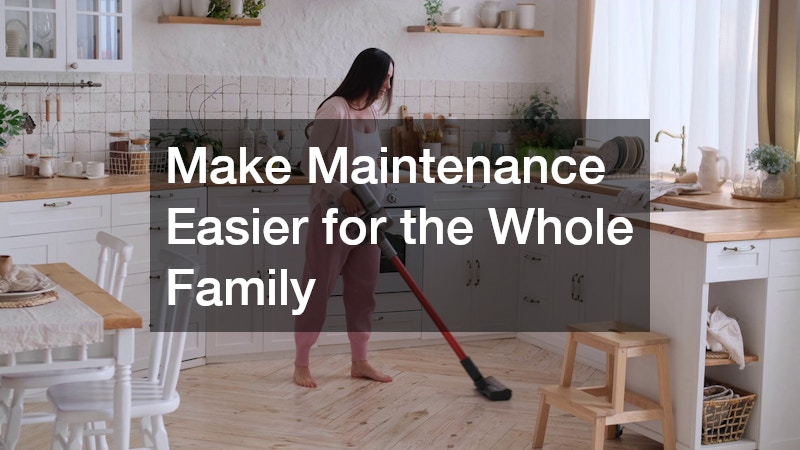
A home is easier to care for when cleaning and maintenance are shared. No one person should have to remember every task, especially in a busy household. A family-friendly system makes the work more manageable.
Start by assigning simple responsibilities. Young children can put toys away, place shoes in a designated spot, or help wipe small surfaces. Older children can vacuum, take out trash, clean bathrooms, or help with seasonal projects. Adults can handle safety-related tasks, service scheduling, and more difficult cleaning jobs.
Create a weekly list that includes basic household tasks. Then create a separate monthly or seasonal list for deeper projects. Keep both lists visible or saved in a shared app.
A practical routine might include:
- Daily quick resets in common areas
- Weekly bathroom and kitchen cleaning
- Monthly checks under sinks and around appliances
- Seasonal deep cleaning of floors and exterior areas
- Annual service appointments for major systems
Set reminders for important appointments and filter changes. Many home problems happen because maintenance is forgotten, not because it is difficult. A calendar reminder can prevent missed cleanings, inspections, and seasonal tasks.
By focusing on the areas that affect safety, moisture, airflow, surfaces, and system performance, homeowners can avoid many expensive and stressful problems. Clean floors, clear drainage paths, maintained fixtures, safe fireplaces, dry rooms, and organized outdoor areas all contribute to a healthier and more comfortable home.