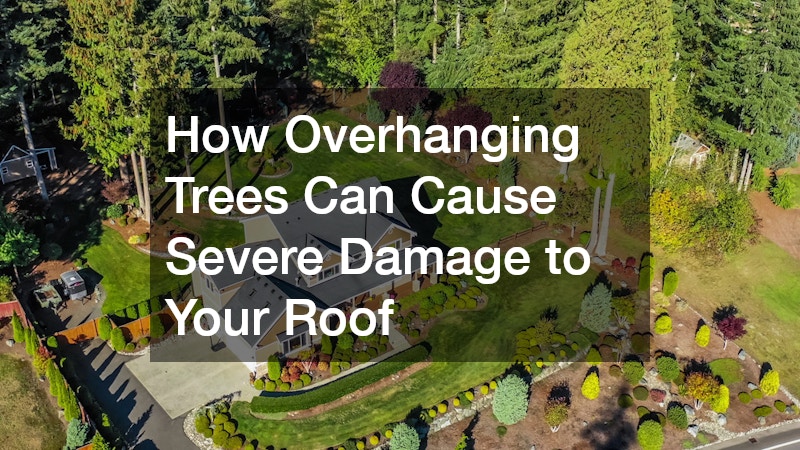
Mature trees add immense value, curb appeal, and natural shade to a residential property. However, when large branches extend over a home’s structure, those beautiful canopies can quietly transform into major hazards. A roof is a house’s primary line of defense against the elements, but it is not designed to withstand constant friction, heavy impact, or persistent dampness caused by encroaching limbs.
Understanding how overhanging foliage threatens a roofing system allows homeowners to take preventive action before small issues turn into costly emergencies. By identifying structural warning signs, managing shade and moisture accumulation, and partnering with qualified professionals, you can protect both your mature landscaping and your home’s structural integrity.
Additionally, regular inspections of your roof and surrounding foliage can help you spot potential risks early on. Look for branches that are leaning or rubbing against the roof, as these can cause damage over time. It’s also important to consider the type of trees within proximity; some species may shed leaves or fruit that can clog gutters and contribute to water damage. By staying proactive and vigilant, homeowners can ensure that their roofing system remains in good condition while maintaining the beauty and health of their landscaping.
Identifying Physical Contact Risks and Structural Impact
Evaluating Mechanical Wear and Direct Branch Impact
The most immediate danger posed by overhanging limbs is direct physical contact with roofing materials. Even when branches appear to hover several feet above the shingles during calm weather, wind gusts cause them to sway dramatically. This repeated motion acts like coarse sandpaper across the roof surface.
Over time, scraping limbs strip away the protective asphalt granules that coat modern shingles. Without these granules, the underlying asphalt substrate is exposed to direct ultraviolet radiation, causing shingles to dry out, curl, crack, and fail prematurely. In severe cases, heavy branches can catch under the edges of shingles during strong winds, tearing them completely off the decking.
- Establish Minimum Clearance: Maintain a minimum clearance zone of 8 to 10 feet between the lowest canopy branches and the highest point of your roof to accommodate wind sway and limb sag under heavy rain.
- Inspect High-Friction Zones: Pay close attention to gables, ridges, and dormers where overhanging limbs are most likely to rub against trim and flashing.
- Remove Hazardous Low-Hanging Limbs: Schedule targeted tree trimming before storm season to eliminate low-sweeping limbs that pose an immediate contact risk to roof edges.
- Promote Healthy Growth Angles: Utilize professional tree pruning services to train young trees to grow outward and upward, directing weight away from the home’s footprint.
Beyond continuous abrasion, large overhanging limbs represent a severe impact hazard. Heavy branches saturated with rainwater or weighted by snow can snap without warning, crashing through roof decking, cracking support trusses, and creating immediate structural openings for rainwater to pour into living spaces.
Managing Microclimates, Shade, and Moisture Accumulation
Eliminating Damp Conditions That Rot Shingles and Decking
Direct physical impact is obvious, but the indirect microclimate created by a dense tree canopy can be equally destructive to a roof over time. A thick canopy blocks sunlight and restricts airflow across the roof surface, preventing morning dew, humidity, and rainwater from evaporating efficiently.
This persistent dampness creates a thriving environment for biological growth, including moss, algae, and lichen. Moss in particular acts like a sponge, holding moisture directly against shingle surfaces. As moss grows, its root-like structures push up shingle edges, allowing water to track underneath the primary roofing layer onto the organic felt underlayment and wood decking below.
Accumulated leaves, pine needles, and twigs in roof valleys and gutters compound these moisture problems. When organic debris collects in roof valleys, it traps water and prevents smooth drainage toward the eaves.
When gutters fill with fallen foliage, water backs up under the edge of the roof, leading to rot in the fascia boards, soffits, and underlying roof sheathing. Ignoring these moisture traps eventually leads to extensive water intrusion, necessitating costly emergency roof repairs to restore structural integrity.
Maintaining a clean, well-differentiated drainage system is crucial for long-term health. Regularly clearing debris and ensuring proper ventilation across all roof slopes helps preserve shingles and minimizes the need for comprehensive roofing services to fix widespread wood rot.
Mitigating High-Risk Trees and Hazardous Overhangs
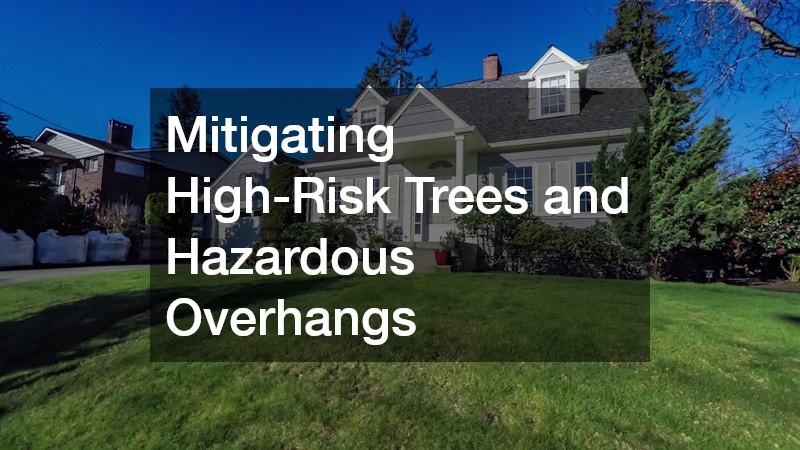
Dealing With Diseased, Dying, or Structurally Unstable Limbs
Not all tree threats can be solved with minor trimming. When mature trees hovering near or over a house begin to suffer from internal decay, disease, or structural defects, they pose an existential risk to the structure beneath them.
Identifying hazardous trees before they fail requires a trained eye. Structural red flags include hollow trunks, severe lean angles toward the building, fungus or mushrooms growing around the root flare, and large deadwood branches scattered throughout the upper canopy.
- Examine Root Zones: Look for raised soil, cracked pavement, or cut roots near driveways and foundations that could destabilize the tree during high winds.
- Identify Deadwood: Dead branches lose elasticity and can fall suddenly even on windless days; look for limbs missing bark, leaves, or healthy buds.
- Check Forked Trunks: V-shaped co-dominant stems are prone to splitting down the middle during severe weather events.
When a large tree exhibits advanced decay or sits dangerously close to a home’s foundation, partial pruning may not offer adequate protection. In these scenarios, utilizing specialized tree removal services is the safest path forward.
Working with a licensed local tree removal service ensures that massive, high-risk timber can be systematically lowered in sections using specialized rigging systems, preventing any accidental impact on your home or surrounding property.
Performing Professional Inspections and Structural Assessments
Working With Certified Specialists to Evaluate Property Safety
Managing the delicate balance between tree health and home safety often requires expert diagnosis. Guessing whether a limb is strong enough to withstand a storm or whether a roof has suffered structural compromise can lead to costly mistakes.
When evaluating tree health near structures, bringing in a certified arborist provides an objective, science-based assessment. These experts can evaluate internal trunk decay using specialized diagnostic tools, assess soil conditions, and recommend precise crown reduction or cabling strategies to stabilize heavy limbs without destroying the tree’s health.
Similarly, after heavy storms or prolonged contact with overhanging foliage, having a professional evaluate your roof’s condition is essential. Catching minor granule loss, cracked flashing, or subtle underlayment leaks early prevents widespread structural rot inside wall cavities.
When requesting professional roof estimates, ensure the inspector conducts a thorough evaluation of both the exterior shingle layer and the interior attic space. A comprehensive estimate should clearly outline any hidden deck damage, flashing displacement, or ventilation issues caused by encroaching trees, providing a clear roadmap for necessary repairs.
Coordinating Repairs and Professional Trade Services

Selecting the Right Trades for Complex Exterior Maintenance
Protecting your home from overhanging tree damage requires a coordinated approach between landscaping and building repair specialists. Scheduling work in the correct sequence prevents newly repaired surfaces from being damaged by subsequent tree work.
Always address tree hazards first. Heavy limbs should be trimmed or removed before any roof restoration takes place. This prevents fallen branches, heavy equipment, or worker foot traffic from damaging fresh shingles or newly installed flashing during the pruning process.
Once the canopy clearance is established, hire a licensed roofing contractor to perform a post-clearance inspection and execute needed repairs. A qualified contractor will check for hidden impact damage beneath former overhang zones, replace compromised underlayment, and ensure all valley flashings are completely clear of organic residue.
When selecting a trusted local roofer, verify that they carry specific liability insurance and workers’ compensation coverage suitable for working alongside mature landscaping. Establishing an ongoing relationship with both tree care and roofing specialists ensures your home remains safe, dry, and protected through every season.
Preventing Pest Access Points and Attic Intrusions
Blocking Wildlife Highways Created by Encroaching Branches
While physical impact and moisture damage are major concerns, overhanging foliage creates another severe problem that many homeowners overlook: direct access routes for destructive pests. Trees extending near a roofline act as natural bridges, allowing urban wildlife and wood-destroying insects to bypass ground-level defenses and access your home’s weakest entry points.
- Squirrels and Rodents: Squirrels, rats, and mice naturally travel along heavy limbs. When branches come within jump distance of a roof—typically within six to eight feet—rodents gain easy access to dormers, ridge vents, and soft fascia boards. They can gnaw through wooden trim, plastic vent caps, and aluminum soffits to nest in climate-controlled attic insulation.
- Raccoons and Opossums: Larger mammals use sturdy overhangs to reach roof planes where they leverage their strength to pull up loose shingles or pry open attic gable vents, creating massive entry holes that let in driving rain.
- Insect Colonies: Ants, termites, and carpenter bees routinely use touching branches as elevated pathways to locate decayed, moisture-softened roof decking or fascia. Once established, insect colonies cause extensive structural damage hidden behind gutter lines and rafter tails.
Preventing pest entry requires a strict clearance boundary. Eliminating touching branches removes the physical highway, forcing climbing pests back to the ground where physical barriers, home foundation seals, and standard pest management practices are far more effective.
Step-by-Step Guide to Conducting a Canopy and Roof Audit
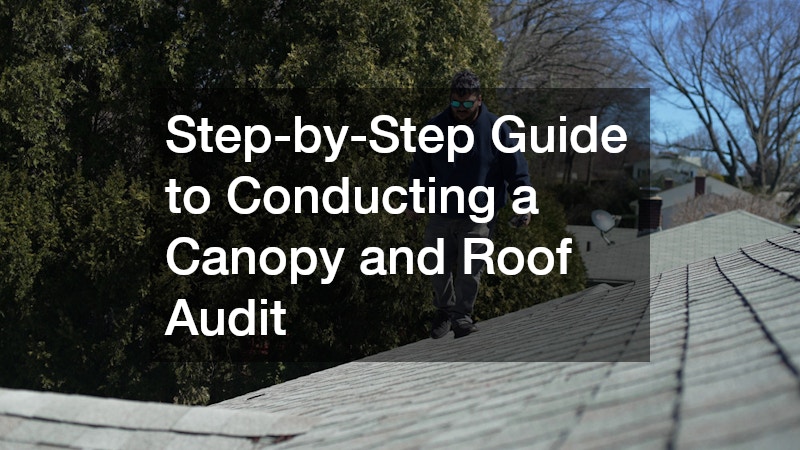
A proactive home defense strategy relies on regular visual inspections. Homeowners should perform a comprehensive ground-level audit twice a year—ideally in early spring and late autumn—as well as after major storm events.
Phase 1: Visual Ground Assessment
Stand at various corners of your yard with a pair of binoculars to evaluate the relationship between your tree canopy and your roofline. Look closely for:
- Branches touching or resting directly on shingles, gutters, or ridge vents.
- Heavy limbs extending directly over bedroom areas or main living spaces.
- Discolored patches, dark streaks, or green moss accumulation on shaded roof slopes.
- Sagging gutters filled with leaves, twigs, or standing water.
Phase 2: Attic Space Inspection
Safely enter your attic space during daylight hours to check for indirect signs of tree-related damage. Look for light entering through the roof deck, damp insulation, dark water stains on rafter tails, or signs of mold growth beneath heavily shaded roof sections.
Phase 3: Property Line and Tree Health Check
Walk the perimeter of your yard to assess overall tree stability. Inspect the base of every tree near your home for root damage, soft soil, or fungal growth, and note whether any neighbor-owned trees have branches encroaching over your property line.
Preventative Canopy Maintenance Plan
Establishing a multi-year maintenance routine prevents small saplings and manageable limbs from turning into dangerous, full-grown structural threats:
- Bi-Annual Care (Every 6 Months): Clean out roof valleys and gutters completely, removing all organic leaves, needles, and soil buildup that trap moisture against the roofline.
- Annual Review: Conduct a ground-level inspection of your canopy clearance and general tree health, checking for low-hanging or newly grown limbs approaching the roof.
- Long-Term Management (Every 3 to 5 Years): Schedule professional canopy thinning and a comprehensive arborist assessment to evaluate structural load, manage heavy growth, and maintain healthy tree structure safely away from your home.
Proper tree management involves strategic thinning rather than harsh topping. Topping a tree—cutting off the main leader branches—creates weak, fast-growing epicormic sprouts that are far more likely to snap during storms than natural branches. Instead, selective crown thinning allows wind to pass through the tree canopy safely while reducing overall weight on heavy limbs.
Additionally, consider planting location when adding new trees to your landscape. Small ornamental trees should be planted at least 15 feet away from the foundation, while large shade trees—such as oaks, maples, or pines—should be placed at least 30 to 40 feet away from the home to allow their mature canopy to spread without threatening your roof.
Long-Term Value and Property Defense
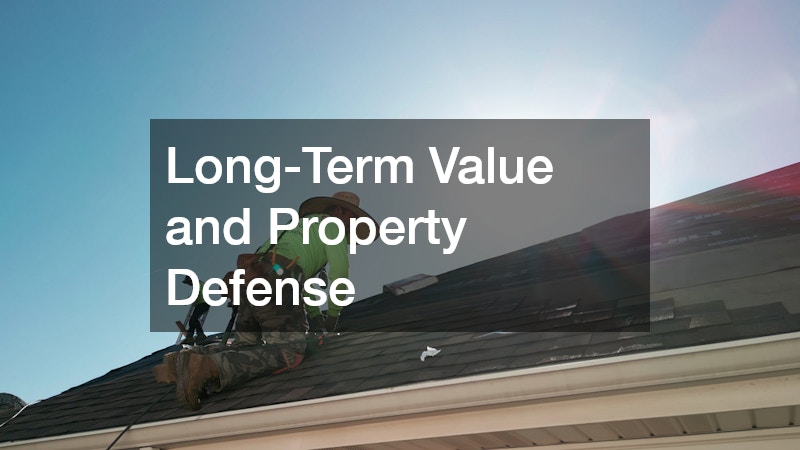
Your roof and your mature trees are two of the most valuable physical assets on your residential property. While trees provide shade, energy savings, and natural beauty, their growth must be managed responsibly to prevent them from compromising the structural shell of your home.
By recognizing the subtle ways overhanging branches inflict physical, biological, and structural damage, you can take control of your exterior maintenance. Conducting regular visual audits, keeping canopies trimmed back to safe clearance distances, and partnering with experienced trade professionals ensures your trees remain healthy and your home stays dry, safe, and secure for decades to come.